Built in a Weekend, Featured on TechCrunch: How BetaList Became THE Startup Launch Platform
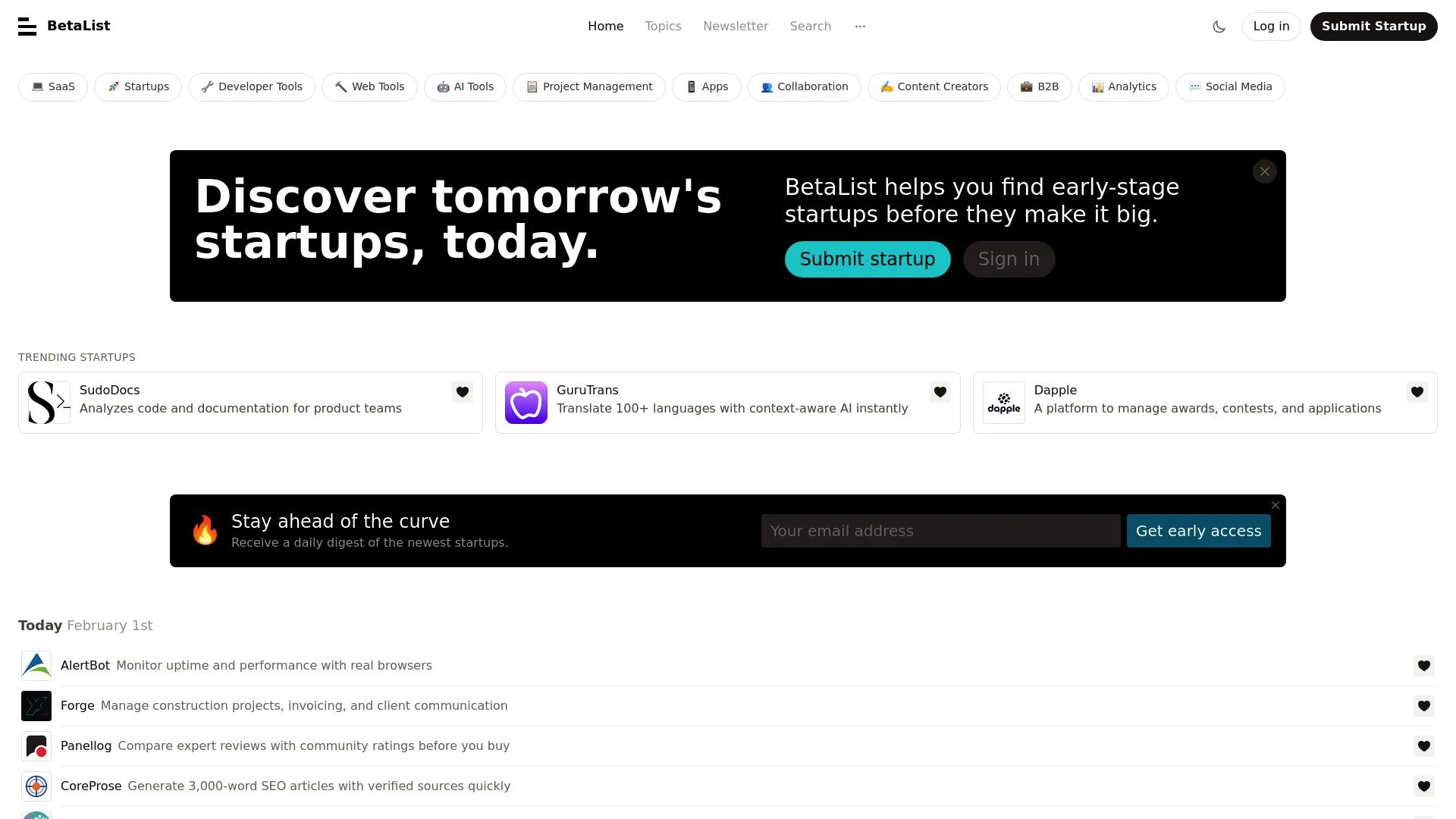
13.4K
Monthly Visitors
$887K
Traffic Value/yr
DR 74
Domain Rating
<$10
Initial Cost
Marc Kohlbrugge built BetaList in a weekend for under $10. The next morning, it was featured on TechCrunch.
That's not startup mythology—it's exactly what happened. In one weekend in 2010, Marc created a simple Tumblr page to list promising startups before they launched. He customized a free theme, added a few startups he found on Hacker News, and shared it.
By Monday, TechCrunch was writing about it. BetaList had become THE startup discovery platform—featuring companies like Pinterest before they went mainstream.
Today, BetaList generates $887K in annual traffic value with 13,000 monthly visitors. It's proof that sometimes the simplest ideas, executed quickly, create the biggest opportunities.
The Challenge
Marc Kohlbrugge had a problem. He was building a startup called Open Margin and desperately needed beta testers. But finding people willing to try unpolished products felt impossible.
Where do you find early adopters? Where are the people who love discovering new things before anyone else? Most people wanted finished apps, not buggy betas.
Marc couldn't find a good answer, so he created one—in a weekend, for under $10.
Directory Overview
| Website | betalist.com |
| What It Does | Discover and get early access to upcoming startups |
| Founded | 2010 (one weekend) |
| Founder | Marc Kohlbrugge |
| Initial Cost | Under $10 |
| Initial Platform | Tumblr |
| Notable Early Listing | Pinterest (before public launch) |
Key Metrics (Ahrefs, January 2026)
Monthly Traffic
13,448
Modest but highly qualified early adopters
Traffic Value
$887K/year
$66 per visitor—startup founders have budgets
Domain Rating
74/100
Strong authority from years of startup links
Referring Domains
6,330
Startups link to their BetaList features
Traffic Sources
What The Numbers Tell Us
First-Mover in Startup Discovery: When BetaList launched in 2010, there wasn't a dedicated platform for discovering startups pre-launch. Product Hunt wouldn't exist until 2013. BetaList owned the category for years.
Built-in Virality: Founders wanted their startups featured, so they shared BetaList with their networks. Each submission brought new visitors who might also submit their own startups.
Community of Early Adopters: BetaList attracted people who self-identified as early adopters—exactly the users startups needed. This concentration of ideal beta testers made the platform valuable.
Consistent Curation Maintains Quality: Rather than listing everything, BetaList maintains quality standards. This curation makes each featured startup more valuable and keeps early adopters returning.
Monetization: Queue-Jump Pricing
The Evolution of Pricing
BetaList features a limited number of startups each day. As it grew popular, a waiting list formed. Founders started asking if they could skip the queue.
Marc responded by charging—and iterating:
- • First: $15 to jump the queue
- • Then: $24, $29, increasing gradually
- • Eventually: Up to $199 for same-day featuring
Additional Revenue Streams
Newsletter sponsorships and featured spots for select startups provide additional monetization beyond queue-jump fees.
Why This Model Works
Limited daily spots create genuine scarcity. Startups have launch timing constraints—demo days, funding announcements—making waiting weeks impossible. Getting in front of thousands of early adopters is worth far more than $199 to a startup seeking beta testers.
Build Your Own Directory Success Story
BetaList was built in a weekend. What problem could you solve by this time next week?
Get Weekly Directory Case Studies
SEO & Content Strategy
Branded Traffic Dominates: Most of BetaList's search traffic comes from people searching for "betalist" or "beta list"—people who already know about the platform.
Startup Name Traffic: BetaList also ranks for the names of startups it features. When someone searches for a featured startup, BetaList's listing page often appears in results.
Modest But Valuable: 13,000 monthly visitors isn't massive, but they're highly qualified—early adopters actively looking to discover new products. Quality over quantity.
| Top Keywords | Volume | Position |
|---|---|---|
| betalist | 800 | #1 |
| beta list | 100 | #1 |
| hashcut | 60 | #1 |
| browser lol | 2,600 | #10 |
| honest math | 2,600 | #13 |
Timeline: From Weekend Project to Full-Time Business
2010: Marc builds BetaList in one weekend on Tumblr. TechCrunch features it immediately.
2010-2013: Platform grows organically. Featured startups include future successes like Pinterest.
2013: Product Hunt launches, becoming a new competitor in the startup discovery space.
2014-2016: BetaList differentiates by focusing on pre-launch startups seeking beta testers, while Product Hunt focuses on launched products.
2016+: Marc introduces queue-jump pricing, turning the platform profitable.
2020s: BetaList continues as a sustainable, bootstrapped business. Marc runs it alongside other projects like WIP (a public accountability community for makers).
Key Lessons for Directory Builders
1. Launch with an MVP, Not a Product
A Tumblr page with a free theme was enough to get TechCrunch coverage. Marc didn't build a custom platform with user accounts and submission forms. He started with the simplest version that could work.
2. Solve Your Own Problem
Marc needed beta testers. He built a directory to find them. Personal frustration creates motivated founders—you understand the problem deeply because you live it.
3. Scarcity Creates Monetization
Limited daily features + waiting list = queue-jump pricing opportunity. Marc didn't manufacture artificial scarcity; natural constraints of featuring quality startups created genuine demand.
4. Speed Matters More Than Polish
One weekend, under $10, featured on TechCrunch. Speed beats perfection when you're testing ideas. You can always improve later if the concept works.
5. Stay Lean, Stay Profitable
BetaList works because Marc didn't over-hire or over-engineer. He built systems that let one person manage submissions, maintain quality, and capture revenue without a team.
6. Iterate on Pricing
Starting at $15 and gradually raising to $199 showed discipline. Marc learned what the market would pay through experimentation, not guessing.
Conclusion
Sometimes the best businesses come from solving your own problem quickly rather than planning the perfect solution slowly.
Marc needed beta testers for his startup. Instead of complaining about the problem, he spent a weekend building a solution. That weekend project is now a profitable business.
The approach was deliberately minimal:
- Free tools (Tumblr, free theme)
- Minimal investment ($10)
- Fast execution (one weekend)
- Real validation (TechCrunch coverage)
Most people would have spent months building a custom platform, integrating payment systems, and perfecting the user experience before launching. Marc launched ugly and early—and it worked.
The core insight: Stop planning and start shipping. Use the tools you already have. Launch in a weekend if you can. You can always rebuild later, but you can't validate an idea that only exists in your head.
What problem could you solve this weekend?
Want More Directory Success Stories?
Get weekly case studies on successful directories, growth strategies, and actionable tactics.
Subscribe to Directory Gems
Sources: Ahrefs (traffic data, January 2026), NoCSdegree, Juicy Ideas, Mixergy, marc.io.
Related Case Studies
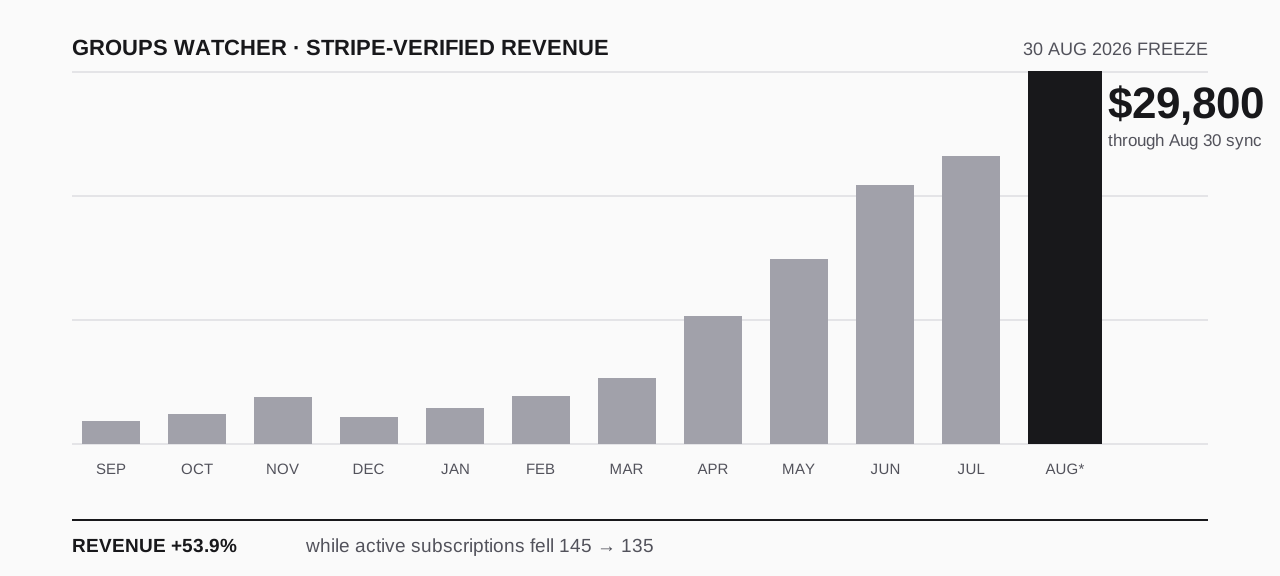
Groups Watcher's August revenue rose 53.9% while active subscriptions fell. Its product history explains the paradox: an alert extension became managed monitoring, then a done-for-you lead service.

A course teaching one arborist exam earns $35,683 a month on a domain Google sends no traffic to. Then the founder cloned it in Spanish — same product, same instructor — and it made $278. Here is what that proves.
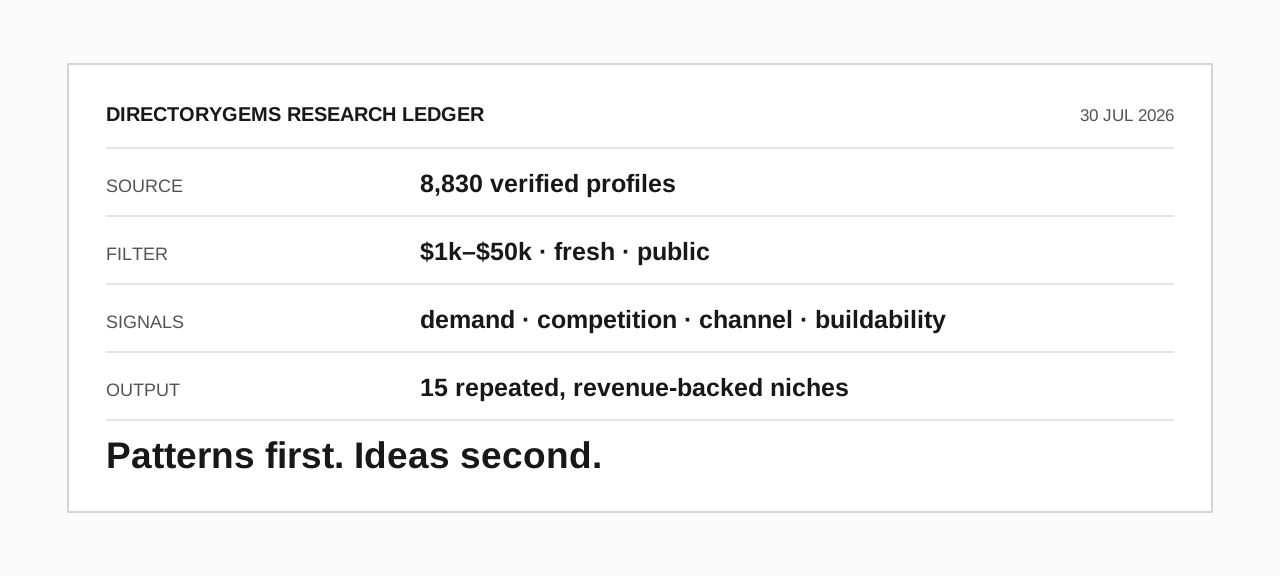
Most micro SaaS idea lists are invented. These 15 are each backed by named companies whose revenue is read from Stripe and RevenueCat APIs — with the exact revenue, domain rating and follower count behind every one.
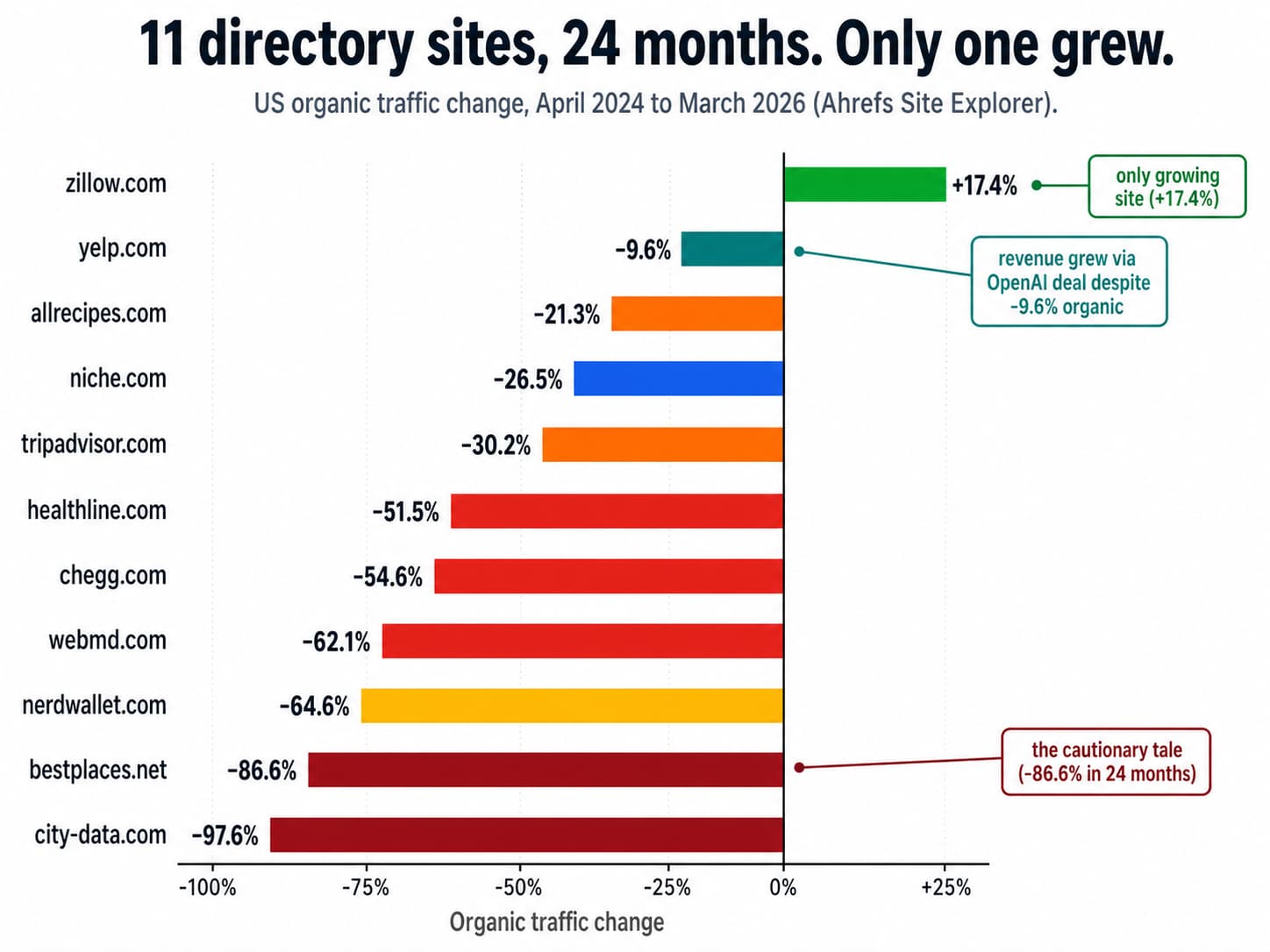
Of 11 directory sites audited against Ahrefs in April 2026, only Zillow grew. Two-thirds lost 21–98%. Six repeatable patterns separate winners, decoupled survivors, and dying directories.