Discogs: $9.6M Traffic Value from 1.6M Monthly Visitors
1.64M
Monthly Visitors
$9.6M
Traffic Value/yr
90
Domain Rating
84.6K
Ref. Domains
In 2024, Discogs members added 105.7 million records to their collections.
That's not a typo. Over one hundred million pieces of physical music—vinyl records, CDs, cassettes, 8-tracks—were cataloged in a single year. More than 2 million items per week. And it wasn't done by Discogs staff. It was done by collectors obsessed with documenting every pressing, every variant, every piece of music ever made.
This is Discogs: a user-generated database aiming to catalog every piece of physical music ever created, combined with a marketplace where those records change hands. With 1.6 million monthly visitors, 18+ million database entries, and 830+ million items in user collections, it's the definitive resource for music collectors worldwide.
The Challenge
In 2000, tracking electronic music releases was nearly impossible.
Kevin Lewandowski, a computer science graduate from Loyola University New Orleans, had just taken voluntary severance from Intel after three failed internal startups. He was deep into electronic music—DJs needed to know which versions of tracks had which remixes, but there was no central database.
Different labels. Different countries. Different pressings. No way to track what existed.
So Lewandowski gave himself six months to build something that combined his programming skills with his passion: a comprehensive electronic music database. It took about nine months to reach sustainability.
Directory Overview
| Website | discogs.com |
| Founded | 2000 |
| Founder | Kevin Lewandowski |
| Niche | Music database + marketplace for physical music |
| Business Model | Marketplace fees + advertising |
| Database | 18+ million releases, 830M+ items in collections |
Key Metrics (Ahrefs, January 2026)
Monthly Organic Traffic
1,636,970
Top music database globally
Traffic Value
$9.6M/yr
Would cost this much in Google Ads
Domain Rating
90/100
Elite authority level
Referring Domains
84,598
47.9M total backlinks
Search Performance
Monthly Organic Traffic
1,636,970
Traffic Value
$9,600,000/year
Database Scale (2024)
Total Releases
18M+
Items Added in 2024
105.7M
Traffic Sources
What The Numbers Tell Us
Vinyl revival = traffic tailwind: Physical music, especially vinyl, has experienced 17 consecutive years of sales growth in the US. Every new vinyl collector needs a way to catalog and value their collection—Discogs is positioned perfectly.
Brand becomes the search term: "Discog" and "discogs" together drive 200,000+ monthly searches. When people search for your brand name directly, you've created a moat no competitor can easily cross.
47.9 million backlinks from two decades: Being the authoritative music database for 25 years has earned nearly 48 million backlinks. This domain authority is essentially impossible for new competitors to replicate.
Monetization Strategy
Revenue Model
Discogs' genius: the database is free to build and use. Revenue comes from the marketplace transactions that database enables.
Marketplace Fees
Seller fees on thousands of daily transactions. One of the largest music marketplaces in the world for vinyl, CDs, and cassettes.
Advertising
Music labels, pressing plants, record stores, and audio equipment manufacturers pay to reach serious music collectors.
Database Licensing
Labels, retailers, and music services license the comprehensive database for their own applications.
Premium Seller Tools
Enhanced features for serious sellers generate subscription revenue.
Why This Model Works: If Discogs had charged for database contributions, they'd have a fraction of 18 million releases. By keeping the database free and open, they attracted obsessive collectors who documented millions of releases for free. Then they monetize the traffic and transactions that comprehensive database generates.
Want to Build a Directory Like This?
Get weekly case studies with real numbers, growth tactics, and monetization strategies.
Subscribe Free
Join 500+ directory builders
Top Ranking Keywords
| Keyword | Volume | Position | Traffic |
|---|---|---|---|
| discog | 138,000 | #1 | 132,689 |
| discogs | 64,000 | #1 | 63,579 |
| discog define | 105,000 | #10 | 3,187 |
| yukihiro takahashi | 24,000 | #3 | 1,517 |
| sabrina carpenter discography | 12,000 | #4 | 875 |
SEO Insights
Millions of indexable pages: Every artist has a page. Every album has a page. Every pressing variant has a page. 18+ million releases = 18+ million potential search entry points.
Obsessive detail wins search: The details collectors add—catalog numbers, matrix codes, pressing plant information—create uniquely comprehensive pages that outrank simpler databases.
"[Artist] discography" captures research intent: When someone searches for an artist's complete works, Discogs often ranks. This captures users early in their collecting journey.
Competitive Landscape
Key Competitors
| Competitor | Focus | Differentiation |
|---|---|---|
| allmusic.com | Database + reviews | Discogs has physical format focus + marketplace |
| musicbrainz.org | Open music database | Discogs has collector focus + marketplace + price data |
| rateyourmusic.com | Music ratings | Discogs has pressing variant detail + marketplace |
| bandcamp.com | Music sales (primary) | Discogs dominates secondary/used market |
| ebay.com | General marketplace | Discogs has music-specific community + database |
Why Discogs Wins: No competitor combines comprehensive music database with integrated marketplace with price guide data. The database makes the marketplace valuable; the marketplace makes the database essential.
Key Lessons for Directory Builders
1. Let Obsessives Build Your Database
Record collectors care about matrix numbers and pressing variants—details Discogs could never document alone. Build tools for obsessives and get millions of hours of free labor from people who enjoy the work.
2. Free Database, Paid Transactions
The database is free to use and contribute to. Revenue comes from marketplace transactions. This model creates the comprehensiveness that makes everything else work.
3. Start Niche, Expand Later
Discogs started as electronic music only. That focus built the best electronic database, attracting contributors who funded expansion to other genres. Start specific, then grow.
4. Marketplace Makes Database Essential
A database is useful. A database with a marketplace is essential. Price data and buying/selling functionality made Discogs the place collectors must use, not just might visit.
5. Ride Cultural Trends
Vinyl's resurgence wasn't Discogs' doing, but they were positioned perfectly to benefit. Being in the right market when that market grows beats being brilliant in a declining market.
6. Brand Becomes Keyword
When "discogs" becomes what people search for, you've won. This only happens through years of being the definitive resource. There are no shortcuts to brand searches.
Conclusion
Here's what Discogs taught me: The best directories often get built by people documenting what they love.
Kevin Lewandowski wasn't trying to build a unicorn. He was a music nerd who wanted to organize electronic music releases. That personal passion attracted other passionate people who contributed millions of hours of documentation for free.
The result is the world's most comprehensive music database—18 million releases and counting, with 105 million items added to collections in 2024 alone. No editorial team could have built this. Only obsessive community contribution could achieve this scale.
For directory builders, the insight is powerful: Find a community of obsessives. Build tools that let them document what they love. Then monetize the traffic and transactions that documentation enables.
What community of obsessives could you empower?
Want More Directory Success Stories?
Get weekly case studies on successful directories, growth strategies, and actionable tactics.
Subscribe to Directory Gems
Sources: Ahrefs (traffic data, January 2026), Vice, Billboard, Mixmag, Wikipedia, company announcements.
Related Case Studies
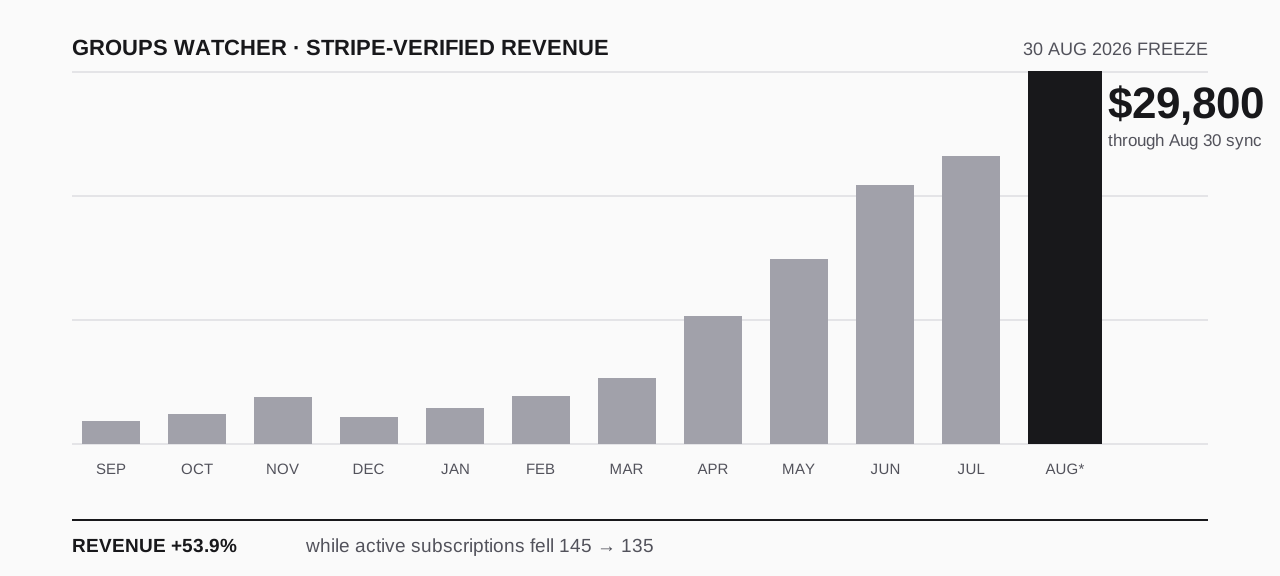
Groups Watcher's August revenue rose 53.9% while active subscriptions fell. Its product history explains the paradox: an alert extension became managed monitoring, then a done-for-you lead service.

A course teaching one arborist exam earns $35,683 a month on a domain Google sends no traffic to. Then the founder cloned it in Spanish — same product, same instructor — and it made $278. Here is what that proves.
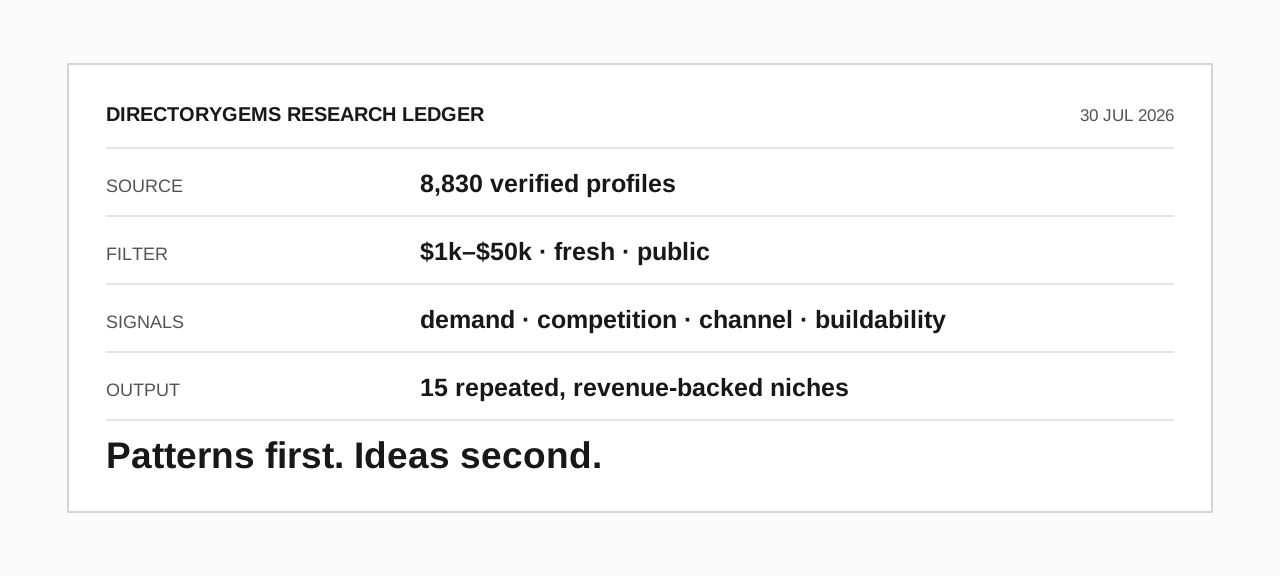
Most micro SaaS idea lists are invented. These 15 are each backed by named companies whose revenue is read from Stripe and RevenueCat APIs — with the exact revenue, domain rating and follower count behind every one.
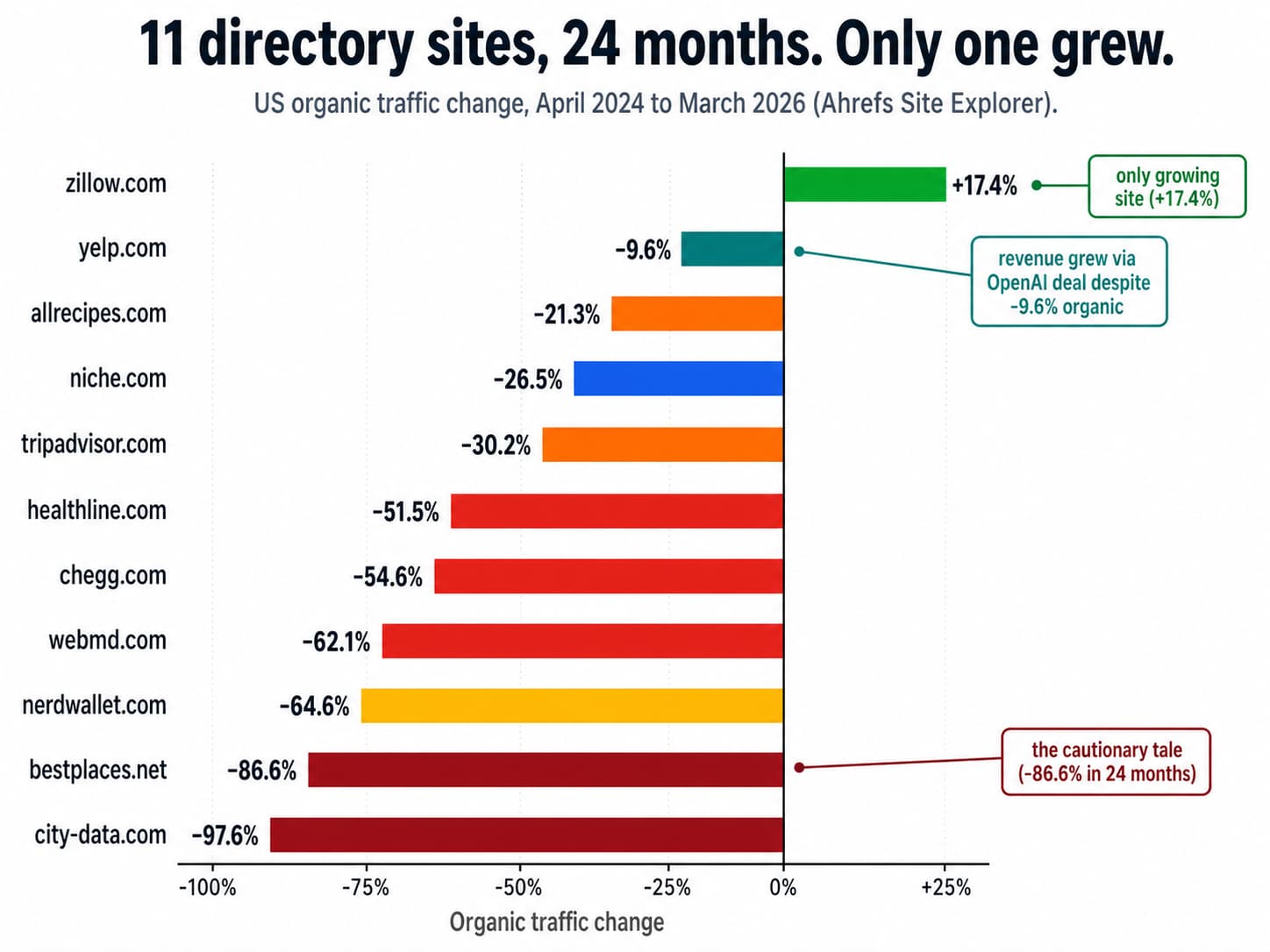
Of 11 directory sites audited against Ahrefs in April 2026, only Zillow grew. Two-thirds lost 21–98%. Six repeatable patterns separate winners, decoupled survivors, and dying directories.