The Knot: $134M Traffic Value from 4.8M Monthly Visitors
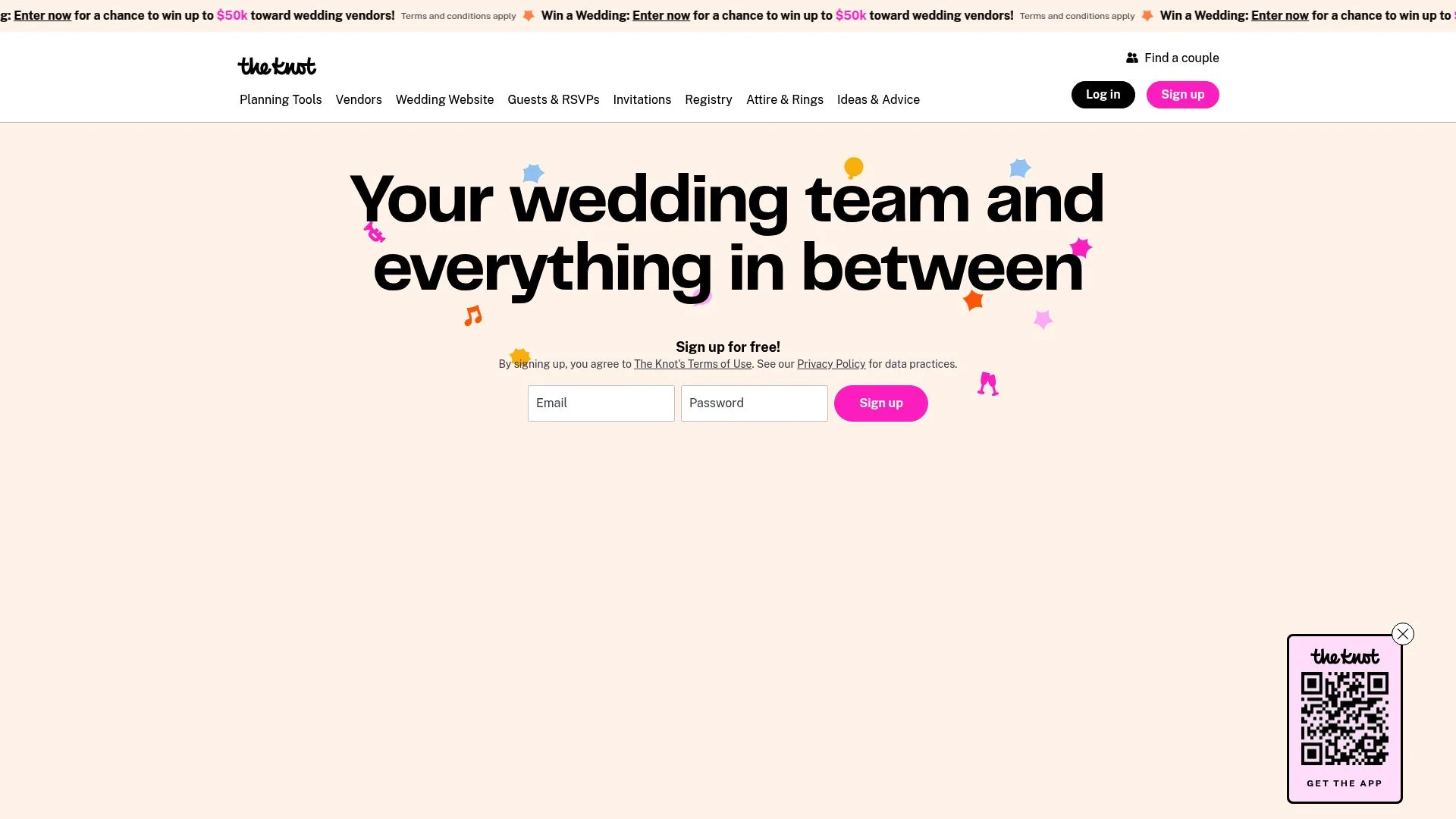
4.8M
Monthly Visitors
$134M
Traffic Value/yr
91
Domain Rating
86K
Ref. Domains
Four film students who had never worked in weddings built a website that now helps plan 40% of American weddings.
That's The Knot. Founded in 1996 by Carley Roney, David Liu, Rob Fassino, and Michael Wolfson—friends from NYU's film school—this directory grew from a scrappy AOL partnership into a wedding planning empire worth $933 million.
Today, The Knot attracts 4.8 million monthly organic visitors and generates $134 million in annual traffic value. When you search for wedding vendors, venues, or planning tools, there's a good chance The Knot is your first stop.
The Challenge
In 1993, planning a wedding meant navigating an industry stuck in the 1950s.
When Carley Roney and David Liu planned their own wedding, they found the experience deeply frustrating. The resources available were stuffy etiquette guides written decades earlier, pushy vendors, and no practical way to organize everything.
There was no central place to compare vendors. No modern tools for tracking RSVPs, budgets, or timelines. No inspiration that matched their sensibilities as young, modern couples.
They wished for something that didn't make them feel like they were planning their grandmother's wedding.
Directory Overview
| Website | theknot.com |
| Founded | 1996 |
| Founders | Carley Roney, David Liu, Rob Fassino, Michael Wolfson |
| Niche | Wedding planning tools, vendor directory, inspiration |
| Business Model | Vendor advertising + subscriptions + leads + registry partnerships |
| Parent Company | The Knot Worldwide (owned by Permira) |
Key Metrics (Ahrefs, January 2026)
Monthly Organic Traffic
4,791,144
More than 99% of wedding sites
Traffic Value
$134.1M/yr
Would cost this much in Google Ads
Domain Rating
91/100
Elite authority level
Referring Domains
85,961
15.5M total backlinks
Search Performance
Monthly Organic Traffic
4,791,144
Traffic Value
$134,100,000/year
Authority Metrics
Domain Rating
91/100
Referring Domains
85,961
Traffic Sources
What The Numbers Tell Us
First-mover advantage compounds over decades: The Knot launched in 1996, before most wedding brands had websites. Nearly 30 years of content, SEO authority, and brand recognition created an almost insurmountable lead.
Brand searches = true moat: "The Knot" alone drives 239,000+ monthly visits. When people search for your brand name directly, competitors can't steal that traffic. The Knot has become synonymous with wedding planning.
User-generated content creates millions of pages: Wedding websites, vendor reviews, and photo uploads created a content library no editorial team could match. Each page is a potential search entry point.
Monetization Strategy
Revenue Model
The Knot built a multi-sided marketplace where couples, vendors, and advertisers all create value.
Vendor Advertising & Subscriptions
Wedding vendors pay for premium placement, featured listings, and enhanced profiles in the directory.
Lead Generation
Vendors pay per lead when couples inquire through the platform. Costs align with actual business opportunities.
Registry Partnerships
Affiliate revenue from millions of couples creating registries linked to major retailers.
Display Advertising
Wedding-adjacent brands (honeymoons, jewelry, home goods) pay to reach high-intent audiences.
Why This Model Works: The Knot created network effects on both sides of the marketplace. More couples using the platform made it more valuable for vendors. More vendors made the directory more valuable for couples. This flywheel is nearly impossible to replicate.
Want to Build a Directory Like This?
Get weekly case studies with real numbers, growth tactics, and monetization strategies.
Subscribe Free
Join 500+ directory builders
Top Ranking Keywords
| Keyword | Volume | Position | Traffic |
|---|---|---|---|
| the knot | 244,000 | #1 | 239,211 |
| wedding planning | 227,000 | #2 | 50,266 |
| pick up lines | 86,000 | #1 | 43,329 |
| theknot | 38,000 | #1 | 36,066 |
| rizz lines | 82,000 | #1 | 29,585 |
SEO Insights
Local + service combinations dominate: The Knot built pages for every combination of "wedding [service] in [city]"—photographers in Chicago, venues in Austin, florists in Miami. Thousands of pages capture high-intent local searches.
Unexpected traffic from relationship content: Ranking for "pick up lines" and "rizz lines" shows how strong domain authority lets you capture tangentially related traffic. This content feeds users into the core wedding funnel.
Wedding websites create indexable pages: Every couple's wedding website lives on The Knot's domain, creating millions of indexed pages that signal activity and freshness to search engines.
Competitive Landscape
Key Competitors
| Competitor | Focus | Differentiation |
|---|---|---|
| brides.com | Wedding editorial | The Knot has deeper vendor directory + tools |
| weddingwire.com | Vendor marketplace | Owned by same parent (merged 2018) |
| zola.com | Registry + planning | The Knot has larger vendor network, longer history |
| pinterest.com | Visual inspiration | The Knot connects inspiration to vendor booking |
| eventective.com | Venue directory | Full wedding ecosystem vs. venue-only focus |
Why The Knot Wins: The 2018 merger with WeddingWire (valued at $933 million) eliminated its biggest competitor. Now The Knot Worldwide owns both leading platforms, creating a near-monopoly in wedding vendor directories.
Key Lessons for Directory Builders
1. Solve Your Own Problem
Roney and Liu built The Knot because they hated planning their own wedding. That authentic frustration informed every product decision and created genuine empathy with users.
2. Build Two-Sided Network Effects
Every couple using The Knot made it more valuable for vendors. Every vendor who joined made it more valuable for couples. This flywheel creates a moat pure content plays can't match.
3. Capture Users Early in Their Journey
Free wedding websites brought couples to The Knot at engagement—often 12-18 months of planning ahead. Early capture means more touchpoints, more vendor connections, more revenue per user.
4. Let Users Create Your Content
Millions of wedding website pages, vendor reviews, and photo uploads created a content library no editorial team could match. Build tools; let users build the content.
5. Time Your Market Entry
Launching in 1996 was perfect—early enough to establish dominance, late enough that the internet had reached mainstream adoption. Finding this timing window matters more than having the best product.
6. Eliminate Competition Through Consolidation
The 2018 merger with WeddingWire didn't just remove a competitor—it created a near-monopoly. When you can't beat the competition, buying them is a viable strategy at scale.
Conclusion
Here's what The Knot taught me: The best directory opportunities often come from personal frustration with an existing industry.
Four film students with no wedding industry experience looked at how people planned weddings and saw something broken. The existing resources were outdated. Vendors were hard to find and compare. There was no central place to organize everything.
They didn't have insider knowledge or industry connections. They had frustration, timing, and the willingness to build what they wished existed.
Twenty-eight years later, The Knot helps plan an estimated 40% of American weddings. The brand has become almost generic—like saying "Google it" for searching.
For directory builders, the insight is clear: Look for industries that frustrate you. Find markets where existing solutions feel stuck in a previous era. Then build the modern alternative—not a slightly better version of what exists, but a fundamentally different approach that uses technology to solve problems in new ways.
What industry frustrates you?
Want More Directory Success Stories?
Get weekly case studies on successful directories, growth strategies, and actionable tactics.
Subscribe to Directory Gems
Sources: Ahrefs (traffic data, January 2026), NPR How I Built This, CBS News, Permira press releases, company filings.
Related Case Studies
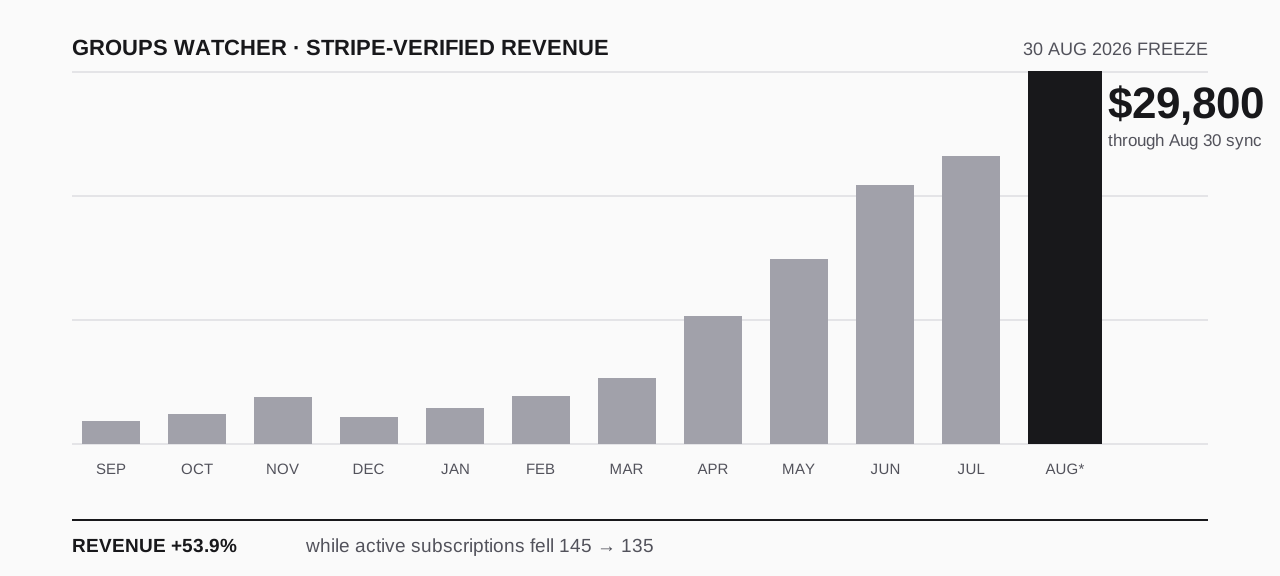
Groups Watcher's August revenue rose 53.9% while active subscriptions fell. Its product history explains the paradox: an alert extension became managed monitoring, then a done-for-you lead service.

A course teaching one arborist exam earns $35,683 a month on a domain Google sends no traffic to. Then the founder cloned it in Spanish — same product, same instructor — and it made $278. Here is what that proves.
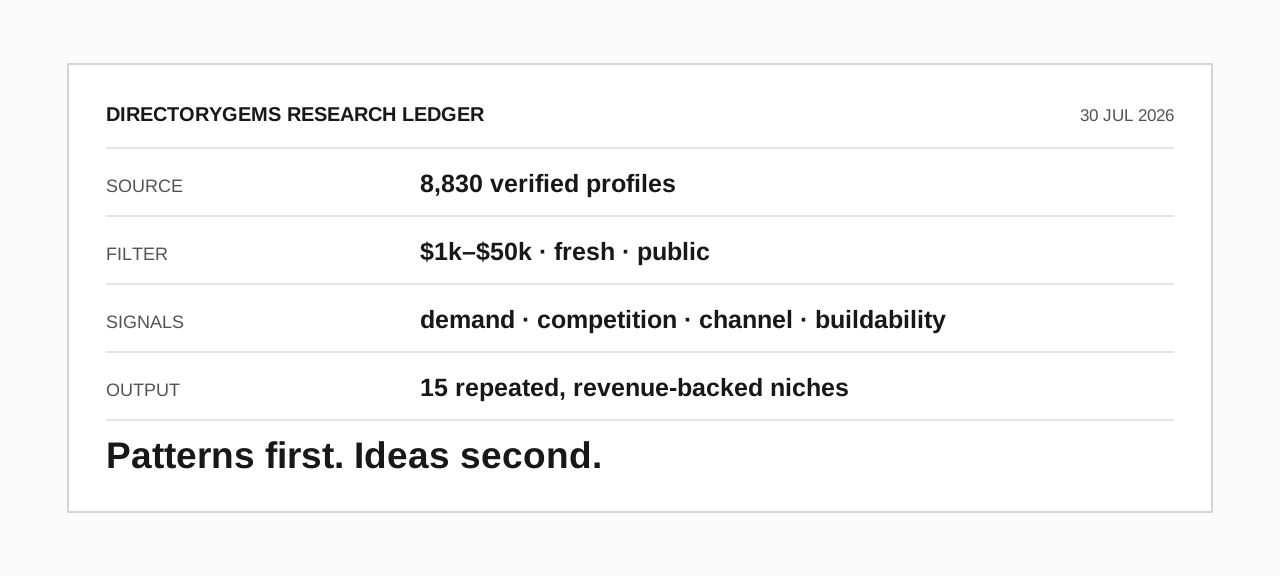
Most micro SaaS idea lists are invented. These 15 are each backed by named companies whose revenue is read from Stripe and RevenueCat APIs — with the exact revenue, domain rating and follower count behind every one.
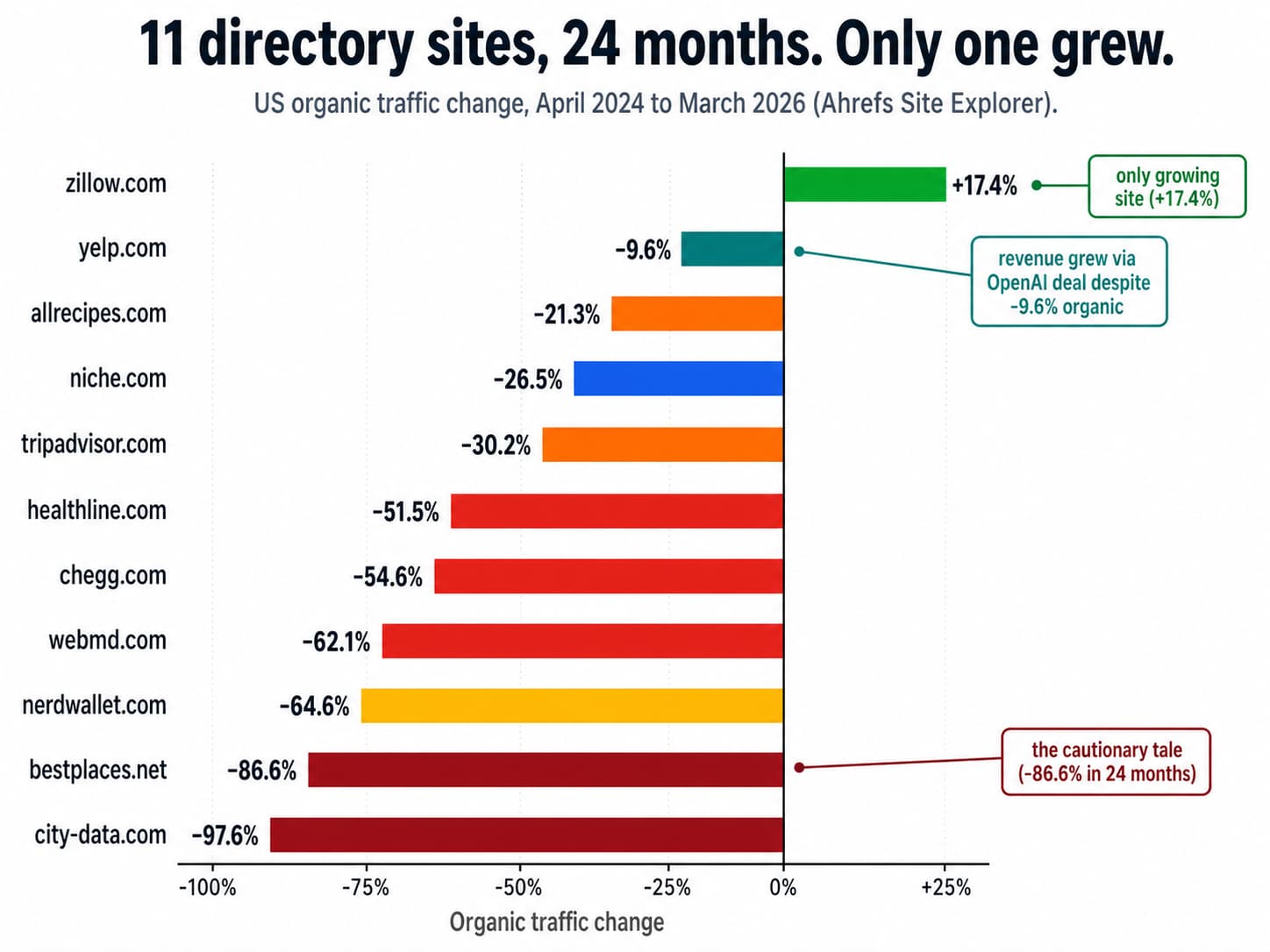
Of 11 directory sites audited against Ahrefs in April 2026, only Zillow grew. Two-thirds lost 21–98%. Six repeatable patterns separate winners, decoupled survivors, and dying directories.